
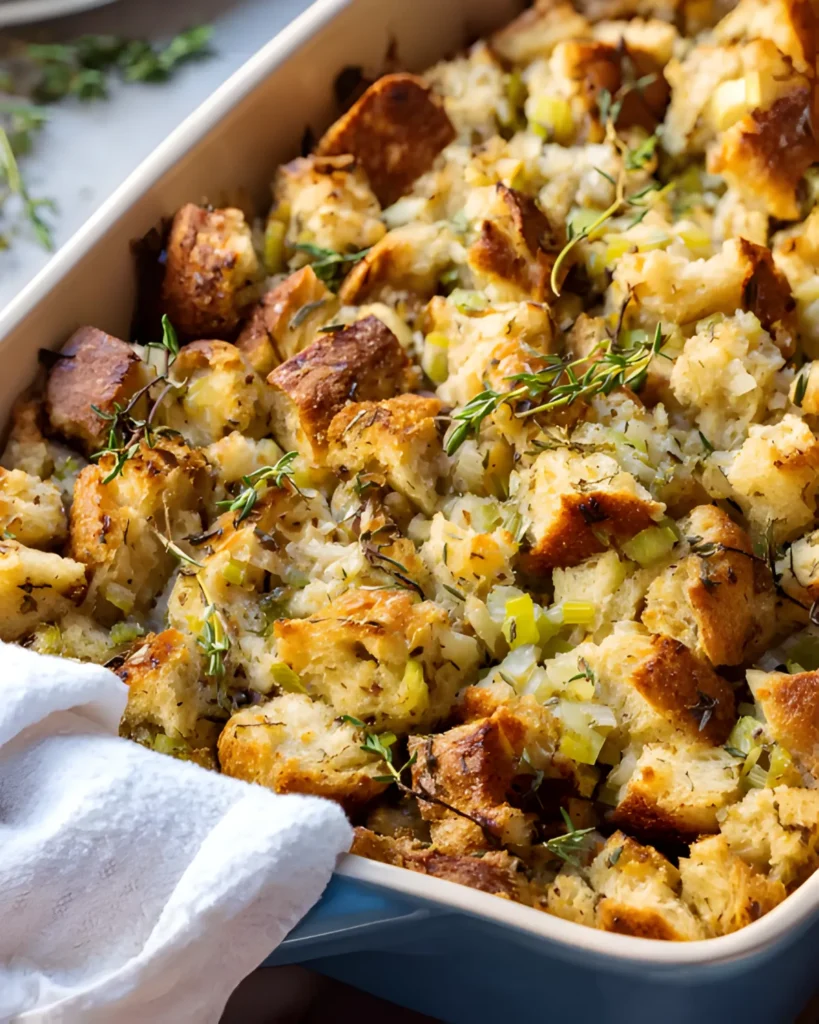
The Best Vegetarian Stuffing is more than just a side dish—it’s the star of any holiday table. Packed with buttery sourdough, sautéed veggies, and fresh herbs, this meatless recipe delivers the cozy, savory flavors you crave without compromising on texture or richness. Whether you’re prepping for a plant-based Thanksgiving or simply want a satisfying alternative to traditional stuffing, this version checks all the boxes. Pair it with vegan mashed potatoes and cranberry relish, and you’ve got a complete spread that everyone—vegetarians and meat-eaters alike—will love.
The Story Behind the Best Vegetarian Stuffing
What Makes This the Best Vegetarian Stuffing?
Let me take you back to my childhood Thanksgiving. The table groaned under the weight of dishes, but it was always the stuffing—golden, crisp on top, tender and savory inside—that made me linger for seconds. Years later, when I began cooking for my own family, I set out to recreate that feeling—only this time, I wanted something meatless. And thus, the best vegetarian stuffing was born in my kitchen, brimming with flavor, texture, and nostalgia.
So what earns this dish its title? First, we start with rustic sourdough bread. The chewy interior and crusty edges create the perfect texture—firm enough to soak up broth, soft enough to stay tender. Next, aromatic vegetables like onion and celery form the flavor base. Then we layer in fresh sage and thyme, whose woodsy notes bring depth and warmth. Finally, a good-quality vegetable stock ties it all together.
Even without sausage or turkey drippings, this dish satisfies. That’s the magic of the best vegetarian stuffing—it’s hearty, savory, and rich in flavor, not filler. It can stand proudly beside roasted pumpkin soup or even rival your favorite entrée.

Why Fresh Ingredients Matter in Meatless Stuffing Recipes
One reason this is hands-down the best vegetarian stuffing is the commitment to fresh, quality ingredients. Don’t skimp on the herbs—fresh thyme and sage add brightness and earthiness that dried herbs can’t match. Use real butter (or a quality vegan alternative) to deepen flavor and create that craveable golden crust during baking.
The bread is the backbone of this recipe, so choose wisely. Sourdough brings a hint of tang that balances the richness. If it’s not stale, don’t worry—I’ll show you in the next section how to dry it quickly for ideal texture.
And here’s the secret: moisture balance. Too dry and it’s crumbly; too wet and it’s mush. The perfect vegetarian herb stuffing is moist, not soggy, with edges that brown and crisp just right. That’s why the best vegetarian stuffing is all about technique—and we’re just getting started.
How to Make the Best Vegetarian Stuffing Step by Step
Prep Your Bread Like a Pro
The base of the best vegetarian stuffing is always the bread, and sourdough is our go-to for good reason. Its hearty texture holds up beautifully when soaked in broth and baked to perfection. You’ll want it dry—not just stale, but firm enough to soak up moisture without turning to mush.
If your bread isn’t quite stale, don’t worry. Preheat your oven to 300°F, spread torn bread pieces on a baking sheet, and toast them for about 15–20 minutes. You’re aiming for dry but not browned. Once cooled, add the pieces to a large mixing bowl and set aside. This step alone makes a huge difference in how flavorful and fluffy your stuffing turns out.
Sauté the Aromatics and Build That Flavor
Now it’s time to build flavor. In a large cast-iron skillet, melt butter over medium heat. Toss in diced onion and celery, and cook for about 5–7 minutes, stirring often. You want them soft and just beginning to caramelize. Add salt, pepper, and a generous helping of chopped fresh thyme and sage.
This is where the magic happens. The herbs mingle with the butter and veggies, releasing aromas that instantly say “Thanksgiving.” Pour the sautéed mixture over your prepared bread and toss gently to combine.
Let it cool slightly before stirring in the beaten eggs—this prevents scrambling. Now, gradually add vegetable stock in ½-cup increments. The best vegetarian stuffing should be moist but never soggy, so add just enough until the bread holds together when squeezed but doesn’t drip liquid.
Want to add even more layers of flavor? Try folding in roasted garlic or sautéed mushrooms. You could even add chopped apples or cranberries for a touch of sweetness, like in our pumpkin gnocchi where savory and sweet play together beautifully.
Baking to Golden, Crispy Perfection
Preheat your oven to 375°F and grease a 9×13 glass baking dish. Spread the stuffing evenly into the dish and cover with foil. Bake for 20 minutes to trap in moisture and set the mixture.
Then, remove the foil and bake another 20–25 minutes until golden and crispy on top. For extra crispiness, broil for the last 3–5 minutes. When done, the edges will pull slightly away from the dish, and the top should feel firm but not dry.
Once out of the oven, let it sit for a few minutes to settle. Serve warm as a perfect pairing to pumpkin cheesecake bars or alongside any of your favorite meatless main dishes. This stuffing doesn’t just complement the meal—it completes it.

Creative Twists on the Best Vegetarian Stuffing
Vegan Stuffing Without Sacrificing Flavor
Want to make the best vegetarian stuffing 100% plant-based? It’s easier than you think. The base flavors of this dish—herbs, veggies, and sourdough—are already vegan-friendly. To make it fully vegan, simply swap out the butter for a high-quality vegan butter and replace the eggs with a flaxseed or chia egg (1 tablespoon ground flax + 3 tablespoons water per egg, mixed and rested until gelled).
You’ll still get that hearty texture and savory depth, especially if you use a rich vegetable stock or even a mushroom broth for extra umami. A touch of nutritional yeast can also add a cheesy, nutty flavor that complements the herbs beautifully.
For a fully vegan Thanksgiving spread, this stuffing pairs wonderfully with fresh cranberry orange relish and air fryer baked potatoes. It holds its own as a main dish, but also shines as a side.
Regional and Flavor-Packed Stuffing Variations
While the traditional herb version is always a hit, you can easily customize the best vegetarian stuffing to match your regional favorites or personal tastes. Love a bit of spice? Add sautéed jalapeños or poblano peppers for a Southwest twist. Prefer something a little sweeter? Mix in chopped dried cranberries, golden raisins, or even diced apples for a festive flair.
Feeling Mediterranean? Stir in kalamata olives, sun-dried tomatoes, and a sprinkle of oregano. Want Southern vibes? Cornbread stuffing made with vegan buttermilk and fresh parsley is both comforting and hearty.
These tweaks don’t take away from the essence of vegetarian herb stuffing—they just make it more personal. And that’s the beauty of it: no matter how you season or swap, the soul of the dish remains grounded in comfort, warmth, and flavor.
When you’re experimenting with ingredients, think balance: for every new addition, adjust your herbs and seasoning. And always taste before baking—vegetarian stuffing recipes are forgiving, but seasoning is key.
Serving and Storing the Best Vegetarian Stuffing
How to Serve the Best Vegetarian Stuffing
When it comes to serving, the best vegetarian stuffing deserves a front-and-center spot on your holiday table. You can serve it directly from the baking dish or spoon it into a warm serving bowl for a more elegant presentation. Garnish with a sprig of fresh thyme or chopped parsley to add color and a pop of freshness.
Stuffing isn’t just a side—it can be a star. Serve it alongside hearty vegetable mains like stuffed squash, lentil loaves, or stuffed pumpkin with rice and sausage. Or pair it with creamy sides such as cauliflower mac and cheese pumpkins and rich gravy for a feast that satisfies every guest.
Hosting a potluck? This stuffing travels well. Just cover with foil and reheat in a 350°F oven for 15–20 minutes once you arrive.
Storage, Reheating, and Freezing Tips
One of the best things about the best vegetarian stuffing is how beautifully it stores and reheats. If you have leftovers (and that’s a big “if”), let the dish cool completely before storing it in an airtight container. It’ll keep in the fridge for up to 4 days.
To reheat, scoop individual portions onto a baking sheet and bake at 350°F for 10–15 minutes. Want it extra crispy? Turn on the broiler for the last 2–3 minutes. Avoid microwaving if you can—it softens the texture and steals that golden crunch.
This stuffing also freezes well. Simply portion it into freezer-safe containers or bags, removing as much air as possible. It’ll keep for up to a month. When you’re ready to enjoy, thaw overnight in the fridge and reheat in the oven until warmed through.
Whether you’re making it fresh or enjoying it the next day, the best vegetarian stuffing remains just as comforting, flavorful, and satisfying. It’s the kind of recipe that fits into any gathering—big or small, traditional or totally your own.

Conclusion
Whether you’re a seasoned plant-based cook or just exploring meatless holiday recipes, the best vegetarian stuffing is the kind of dish that brings comfort, tradition, and just the right amount of crunch to your table. With simple ingredients, fresh herbs, and a few pro tips, you’ll turn an everyday loaf of bread into a centerpiece that impresses.
And as always, cooking is about more than just following instructions. It’s about sharing warmth, stories, and those second-helping moments with the people you love. So preheat the oven, tear up that sourdough, and make something worth gathering around.
Need more recipes? Follow me on Pinterest.

The Best Vegetarian Stuffing – Ultimate No-Meat Recipe
- Total Time: 1 hour 5 minutes
- Yield: 6–8 servings 1x
- Diet: Vegetarian
Description
The best vegetarian stuffing recipe made with sourdough bread, sautéed onions, celery, and fresh herbs. Moist, crispy, and meat-free—perfect for your Thanksgiving table.
Ingredients
1 loaf Sourdough Bread, approx.
1 pound
¾ cup unsalted butter
1 medium yellow onion, diced
2 large celery stalks (or 3 medium), diced
1 ½ teaspoons fine sea salt
½ teaspoon freshly ground black pepper
1 Tablespoon fresh thyme, chopped
2 teaspoons fresh sage, finely chopped
2 eggs, beaten
2 cups vegetable stock (approximately)
Instructions
1. Grease a 9×13 pan with butter or cooking spray. Preheat oven to 375°F. Tear stale bread into bite-sized pieces and set aside.
2. Melt butter in a skillet over medium heat. Add diced onion and celery. Cook for 4–7 minutes until tender.
3. Add salt, pepper, and chopped herbs. Remove from heat. Combine with bread and let cool slightly.
4. Add beaten eggs and stir to combine.
5. Stir in vegetable stock gradually until bread is moist but not soggy.
6. Transfer stuffing to the greased pan. Cover with foil.
7. Bake covered for 20 minutes, then uncover and bake 20–25 minutes more until golden and crispy. Optional: Broil for 3–5 minutes.
8. Let cool slightly. Serve and enjoy.
Notes
Use day-old bread or toast fresh bread at 300°F for 15 minutes.
For vegan version: use plant-based butter and flax eggs.
Stuffing can be made 1 day ahead and baked before serving.
- Prep Time: 20 minutes
- Cook Time: 45 minutes
- Category: Side Dish
- Method: Baking
- Cuisine: American
Nutrition
- Serving Size: 1 cup
- Calories: 270
- Sugar: 3g
- Sodium: 510mg
- Fat: 18g
- Saturated Fat: 10g
- Unsaturated Fat: 7g
- Trans Fat: 0g
- Carbohydrates: 22g
- Fiber: 2g
- Protein: 5g
- Cholesterol: 72mg


1 thought on “The Best Vegetarian Stuffing – 2025’s Ultimate Holiday Side”
Comments are closed.