Yakitori Recipe – The Story & Japanese Street Food Tradition
What Is Yakitori and Why It’s So Popular in Japan
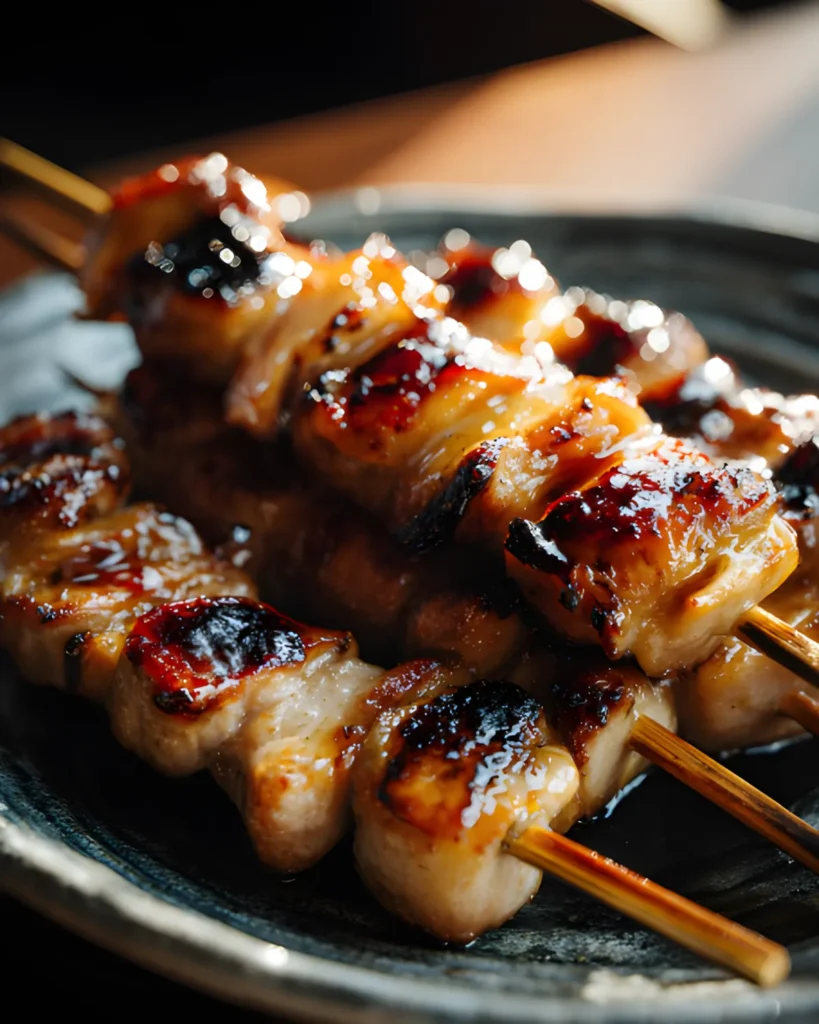
The Yakitori Recipe traces its roots back to Japanese street stalls known as yatai. Vendors grilled skewered chicken over charcoal and brushed it with a rich tare sauce that caramelized beautifully over open flames. The word “yakitori” literally means grilled chicken — “yaki” means grill and “tori” means chicken.
Today, you’ll find yakitori everywhere in Japan, especially in izakayas, where friends gather after work to enjoy small plates and drinks. This Yakitori Recipe captures that same smoky, savory experience but adapts it for home kitchens. Instead of specialized charcoal grills, you can use your oven broiler or stovetop while still achieving delicious results.
Because yakitori uses simple ingredients, it fits perfectly into Japanese food appetizers and works well for Asian themed appetizers when hosting friends. The balance of soy sauce, mirin, and sake creates a glaze that feels both comforting and exciting.
Why This Yakitori Recipe Works for Home Cooks
Many people think Japanese food requires complicated techniques. However, this Yakitori Recipe proves otherwise. You only need chicken thighs, green onions, and pantry staples for the sauce.
First, chicken thighs stay juicy under high heat. Second, the tare sauce reduces into a thick, glossy glaze that clings beautifully to each skewer. Third, the broiler method recreates high-heat grilling without special equipment.
If you enjoy building creative spreads like these Japanese charcuterie board ideas, yakitori makes a stunning centerpiece. It also pairs beautifully with small bites featured in other Japanese inspired appetizers that highlight simple, clean flavors.
This Yakitori Recipe gives you authentic taste with practical steps. As a result, you can serve restaurant-quality skewers right from your own kitchen.
How to Make Authentic Yakitori Recipe at Home
Yakitori Recipe success depends on two key elements: a perfectly balanced tare sauce and properly assembled skewers. When you focus on these steps, you guarantee bold flavor and tender texture every time.
Yakitori Sauce (Tare) – The Flavor Base
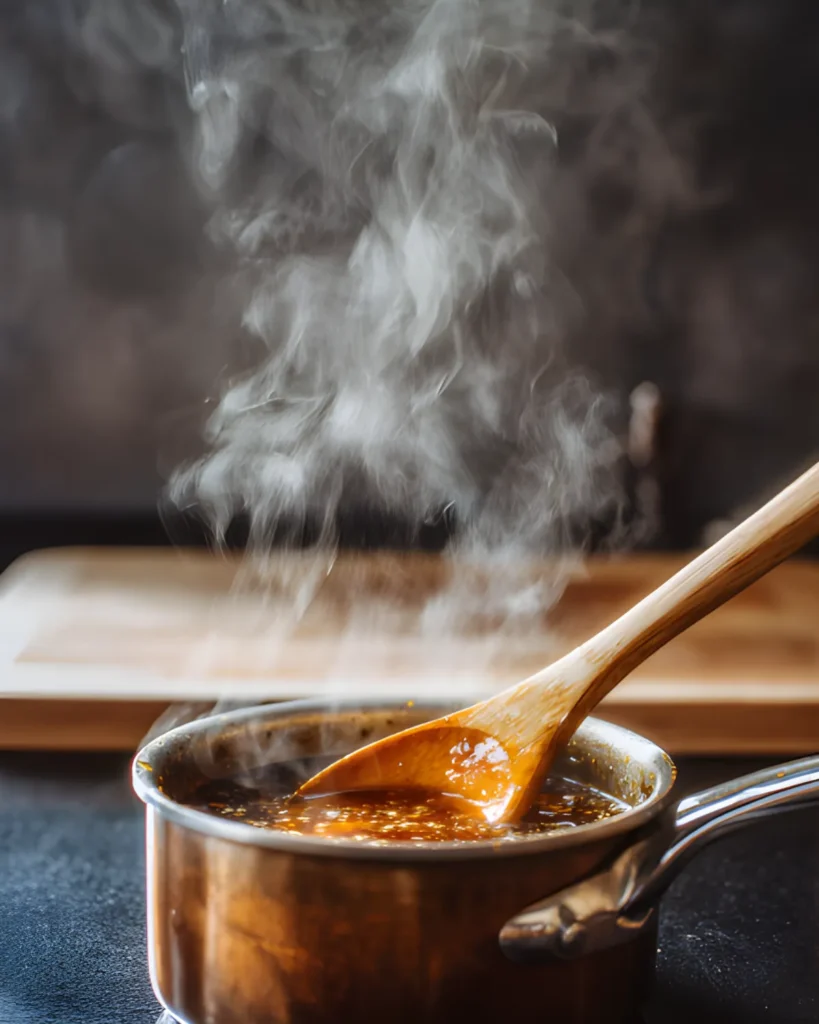
The heart of any authentic Yakitori Recipe lies in its tare sauce. This glossy glaze delivers sweet, salty, and umami flavors in perfect harmony. Because the sauce reduces slowly, it thickens naturally and coats each skewer beautifully.
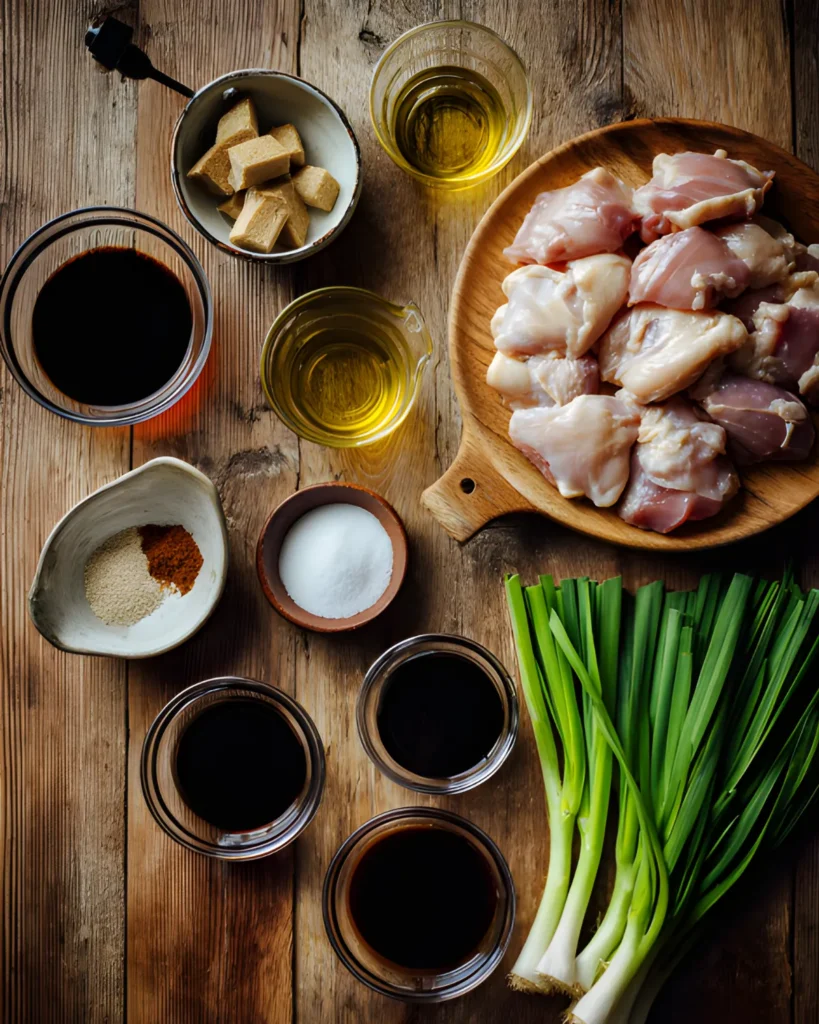
You combine soy sauce, mirin, sake, water, and brown sugar in a saucepan. Then, you simmer the mixture until it reduces to one-third of its original volume. As it cooks, the sauce transforms into a rich, shiny glaze.
Here’s the ideal ratio for balance:
| Ingredient | Amount |
|---|---|
| Soy Sauce | ½ cup |
| Mirin | ½ cup |
| Sake | ¼ cup |
| Water | ¼ cup |
| Brown Sugar | 2 tsp |
Because the sauce stores well for up to three months in the refrigerator, you can prepare it ahead of time for your next Japanese food potluck. In fact, this same glaze works beautifully for other Asian themed appetizers that feature grilled meats or vegetables.
Chicken Skewer Assembly Technique
Now let’s build the skewers properly. First, cut the chicken thighs into 1¼-inch squares. Then, fold each piece in half before threading it onto the skewer. This technique keeps the meat thick and juicy during broiling.
Next, alternate chicken with pieces of Tokyo negi or green onion. Place the onion perpendicular to the skewer. As a result, the vegetables caramelize evenly and add subtle sweetness.
Each 5-inch skewer should hold about three chicken pieces and two onion pieces. Keep everything snug but not overly tight. Proper spacing allows heat to circulate and cook evenly.
If you plan to serve this Yakitori Recipe as part of a spread inspired by Japanese charcuterie board ideas, consistent sizing creates a polished presentation. Similarly, neat skewers elevate your Japanese food appetizers and impress guests instantly.
With your sauce ready and skewers assembled, you’re prepared for the most exciting part — cooking.
Cooking Methods for the Best Yakitori Recipe
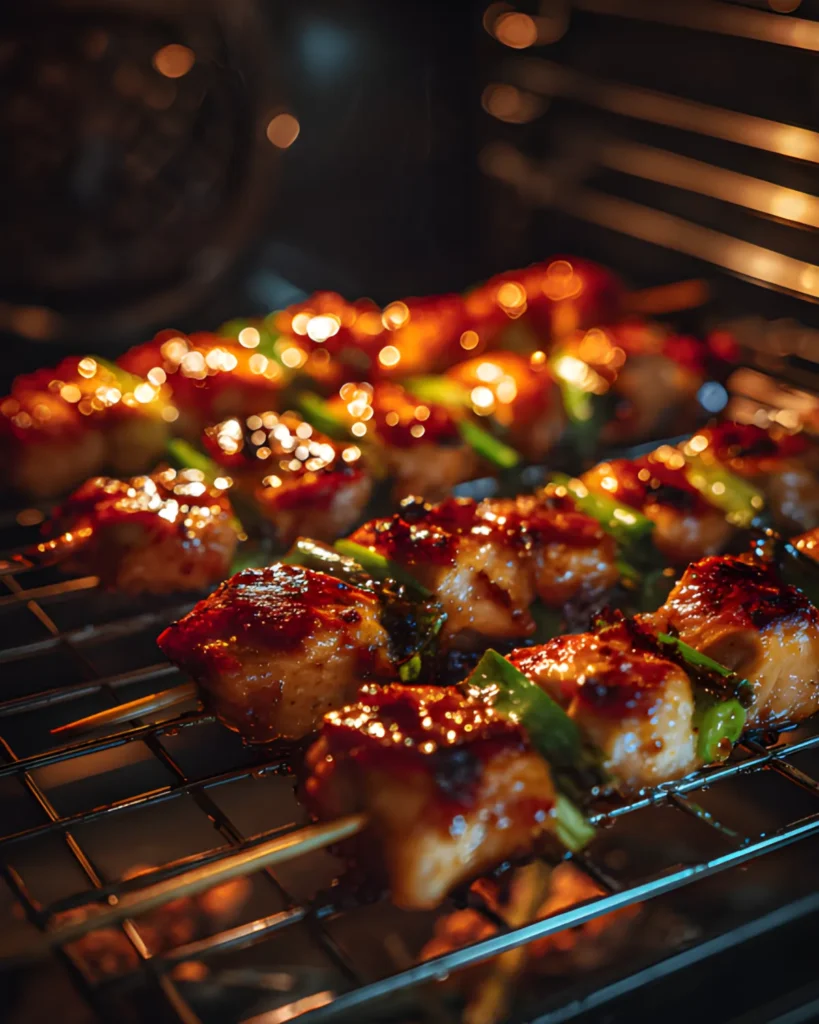
A great Yakitori Recipe depends just as much on cooking technique as it does on sauce. High heat creates caramelization, locks in juices, and delivers that signature street-food flavor. Fortunately, you can achieve excellent results using either your oven broiler or stovetop.
Broiling Yakitori for Authentic Char
For the most authentic texture, broiling works best. First, preheat your broiler to high. Then position the oven rack about 8 inches below the heating element. This distance allows strong heat without burning the glaze too quickly.
Place the skewers on a greased wire rack set over a foil-lined baking sheet. Broil for six minutes. After that, brush the yakitori sauce over the chicken and negi. Flip carefully, baste again, and continue cooking for another three to four minutes.
Because the sauce contains sugar, it caramelizes quickly. Therefore, watch closely during the final minute. Flip once more for presentation, baste again, and broil briefly until glossy and lightly charred.
This method creates beautiful browning that makes your Yakitori Recipe stand out on any platter. If you’re preparing Japanese inspired appetizers for guests, the broiler technique gives you consistent, crowd-pleasing results.
Pan-Frying Option for Easy Weeknight Cooking
Sometimes convenience matters most. In that case, pan-frying offers a reliable alternative. Heat a large skillet over medium heat and add neutral oil. Once hot, place the skewers in a single layer.
Cook each side for about five minutes until golden brown. Then cover the pan and lower the heat. This step finishes cooking while keeping the chicken tender. Afterward, pour the yakitori sauce into the pan and rotate the skewers until fully coated.
Although pan-frying produces slightly less char than broiling, it still delivers excellent flavor. As a result, this Yakitori Recipe becomes ideal for weeknight dinners or quick Asian themed appetizers when time feels limited.
No matter which method you choose, always let the sauce caramelize fully. That glossy finish transforms simple skewers into memorable Japanese food appetizers.
Serving Ideas – From Japanese Charcuterie Board to Potluck Favorite
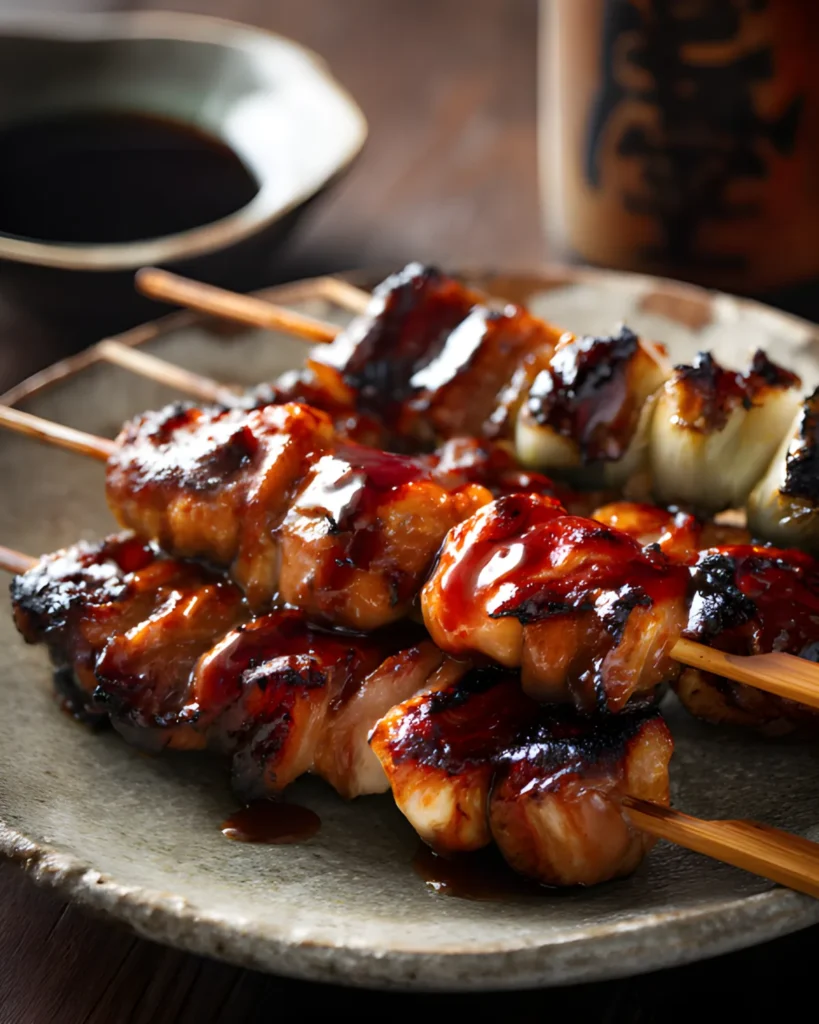
Yakitori Recipe versatility makes it perfect for entertaining. Because the skewers offer bold flavor in small portions, they fit beautifully into party spreads, potlucks, and appetizer boards.
Japanese Charcuterie Board Ideas with Yakitori
First, build your board around the Yakitori Recipe as the centerpiece. Arrange skewers neatly in rows. Then add colorful sides to create balance and contrast.
Include:
- Steamed edamame with sea salt
- Pickled cucumbers or daikon
- Tamagoyaki slices
- Small bowls of extra tare sauce
The glossy chicken skewers add warmth and depth, while vegetables bring freshness. If you enjoy exploring creative Japanese charcuterie board ideas, this combination creates texture, flavor variety, and visual appeal.
Additionally, you can add small bites inspired by other Japanese inspired appetizers to expand your board. Keep portions small and visually organized for maximum impact.
Asian Themed Appetizers & Japanese Food Potluck Ideas
This Yakitori Recipe also travels well, which makes it ideal for a Japanese food potluck. Simply cook fully, cool slightly, and transport in an airtight container. Before serving, warm briefly and brush with reserved sauce for shine.
Because skewers hold individual portions, guests can grab and enjoy without utensils. As a result, yakitori works perfectly among Asian themed appetizers at parties.
For larger gatherings:
- Plan 2–3 skewers per person as appetizers
- Prepare sauce ahead of time
- Assemble skewers earlier in the day
- Broil just before serving
Whether you host a dinner party or contribute to Japanese food appetizers at an event, this Yakitori Recipe guarantees impressive flavor and presentation.
FAQ Section
What is the difference between yakitori and teriyaki chicken?
Yakitori Recipe uses skewered chicken grilled over high heat and brushed with tare sauce during cooking. Teriyaki chicken usually cooks as whole pieces and finishes with sauce added at the end.
Can I use chicken breast instead of thighs?
Yes, but chicken thighs stay juicier under high heat. If you use breast meat, monitor closely to prevent drying.
Can I make yakitori sauce ahead of time?
Absolutely. Store the tare sauce in the refrigerator for up to 2–3 months. Remove the green onion before storing.
What can I serve with yakitori?
Serve it with rice, miso soup, pickled vegetables, or include it in Japanese charcuterie board ideas for entertaining.
Conclusion
This Yakitori Recipe brings authentic Japanese street food flavor into your home kitchen with simple ingredients and practical techniques. Because the tare sauce caramelizes beautifully and the chicken stays tender, each skewer delivers bold, balanced flavor. Whether you serve it as Japanese food appetizers, include it in Asian themed appetizers, or highlight it on a Japanese food potluck table, yakitori always impresses. Master the sauce, control the heat, and enjoy restaurant-quality skewers anytime.
Personal Story
Hi, I’m Ethan—the cook, creator, and voice behind this cozy corner of the web. My love for recipes like this Yakitori Recipe started in a small, sunlit kitchen where simple ingredients turned into unforgettable meals. Watching flavors come together always felt magical. Today, I share dishes that bring people closer, whether it’s comfort food classics or Japanese inspired appetizers like these skewers. Cooking should feel joyful and approachable. So grab your skewers, brush on that glossy sauce, and let’s create something delicious together.
Yakitori Recipe: Ultimate 5-Step Authentic Japanese Feast
- Total Time: 35 minutes
- Yield: 10–12 skewers 1x
Description
Authentic Yakitori Recipe featuring tender chicken skewers glazed in sweet-savory tare sauce. Perfect for Japanese inspired appetizers and potlucks.
Ingredients
½ cup soy sauce ½ cup mirin ¼ cup sake ¼ cup water 2 tsp brown sugar 2 Tokyo negi (or 9 green onions) 1 lb boneless, skinless chicken thighs Neutral oil Shichimi togarashi (optional)
Instructions
1. Soak bamboo skewers for 30 minutes. 2. Prepare tare sauce by simmering soy sauce, mirin, sake, water, brown sugar, and green onion until reduced. 3. Cool sauce to room temperature. 4. Cut chicken thighs into 1¼-inch pieces. 5. Thread chicken and negi alternately onto skewers. 6. Preheat broiler to high and position rack in middle. 7. Broil skewers for 6 minutes. 8. Brush with sauce, flip, and broil 3–4 minutes. 9. Flip again, baste, and broil 1–2 minutes until caramelized. 10. Serve hot with optional shichimi togarashi.
Notes
Reserve one-third of sauce for final basting. Store leftovers in refrigerator up to 3 days. Freeze up to 1 month.
- Prep Time: 15 minutes
- Cook Time: 20 minutes
- Category: Appetizer
- Method: Broiling
- Cuisine: Japanese
Nutrition
- Serving Size: 2 skewers
- Calories: 280
- Sugar: 6g
- Sodium: 820mg
- Fat: 18g
- Saturated Fat: 4g
- Unsaturated Fat: 12g
- Trans Fat: 0g
- Carbohydrates: 8g
- Fiber: 1g
- Protein: 22g
- Cholesterol: 95mg