Introduction
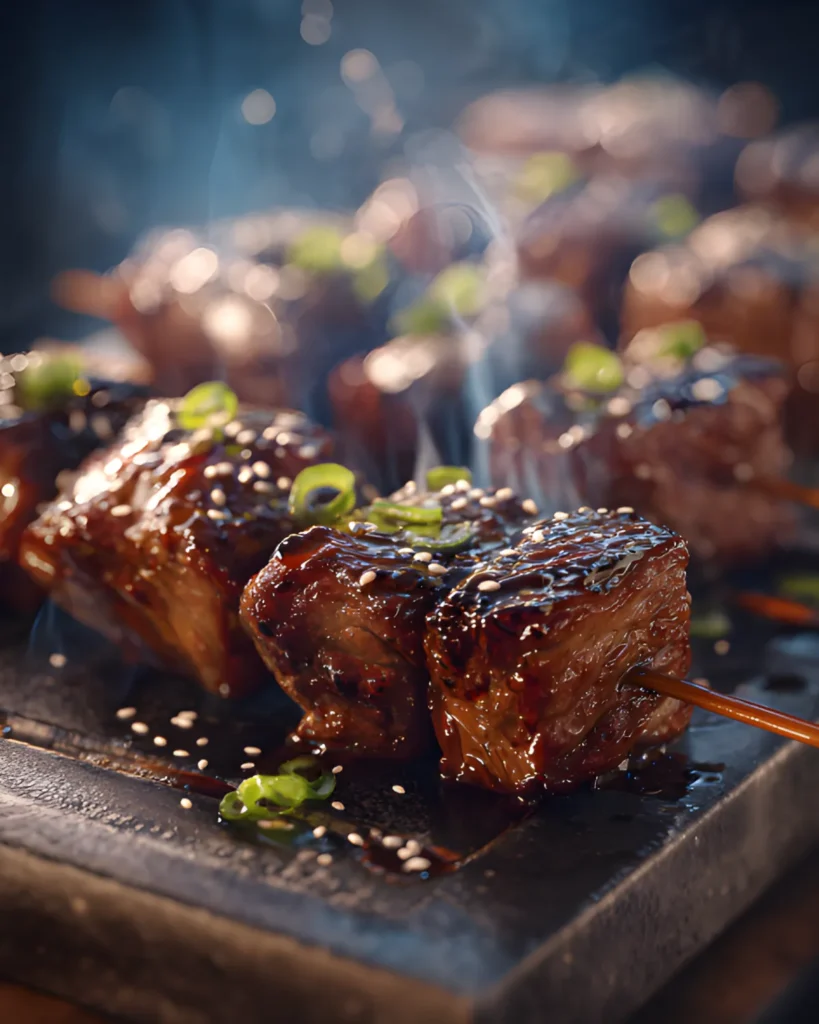
Beef kushiyaki brings bold Japanese grilling tradition straight to your table. These thinly sliced, marinated skewers cook quickly over high heat and deliver a perfect balance of sweet, savory, and smoky flavor. In this guide, you’ll learn how to prepare authentic beef kushiyaki at home, choose the right beef cut, master the marinade, and grill it perfectly every time. I’ll also explain kushiyaki vs yakitori, explore Nobu-style presentation, and share expert tips that elevate your results. Whether you’re planning a backyard cookout or an elegant dinner, this Japanese favorite deserves a place on your grill.
The Story & Origins of Beef Kushiyaki
What Is Beef Kushiyaki?
The first time I tasted beef kushiyaki, I stood near a small charcoal grill at a neighborhood Japanese spot. The aroma reminded me of the bold flavors you often find in our Asian Recipes collection, where grilled dishes highlight balanced marinades and clean heat techniques.
In Japanese, “kushi” means skewer and “yaki” means grill. While kushiyaki includes various proteins, this version focuses on thinly sliced beef that absorbs flavor deeply. If you enjoy mastering grill control, you’ll also appreciate the techniques shared in our Grilling Recipes guide, where high-heat cooking plays a key role.
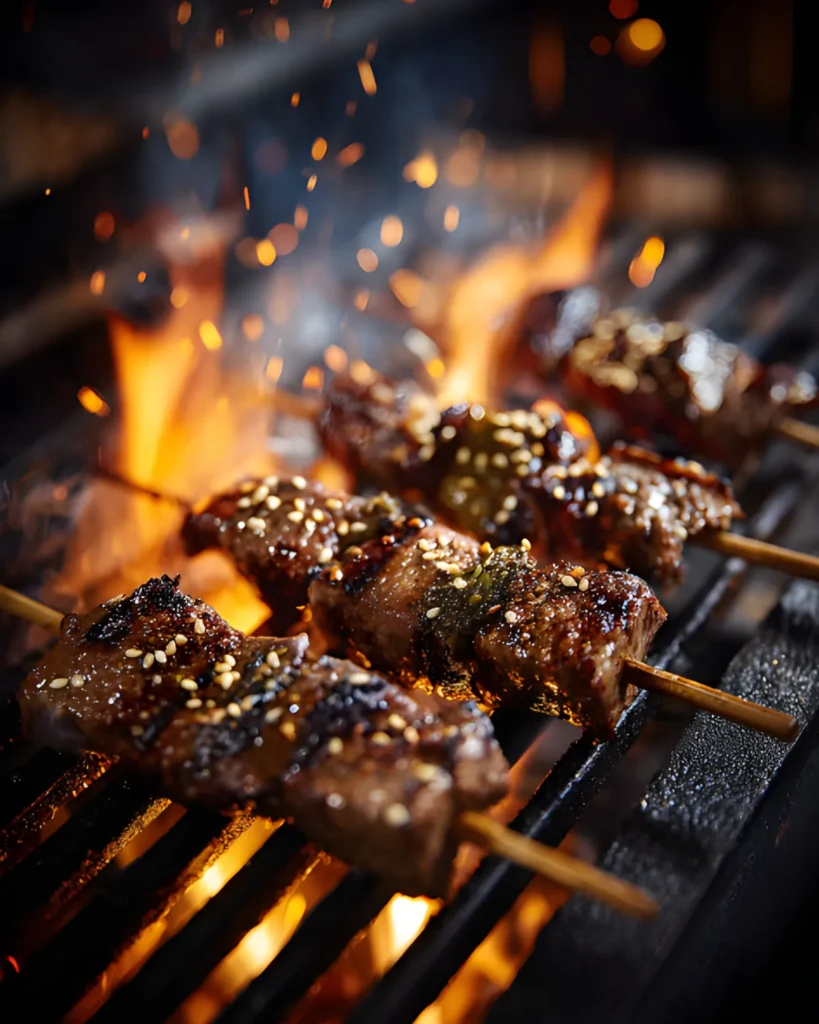
Traditionally, chefs grill over binchotan charcoal, which burns clean and hot. Because of that intense heat, the sugars in the marinade caramelize quickly, forming a glossy exterior while keeping the inside tender.
Today, many home cooks prepare beef kushiyaki on gas grills or grill pans. Fortunately, the results still shine when you control heat properly.
Kushiyaki vs Yakitori – Understanding the Difference
Many people ask about kushiyaki vs yakitori. Although both involve skewered grilling, they differ in protein and technique.
Yakitori specifically refers to chicken skewers. In contrast, kushiyaki includes beef, pork, seafood, and vegetables. While yakitori chefs often brush tare sauce during cooking, beef kushiyaki typically relies on marination beforehand.
Additionally, texture differs. Thin beef slices cook rapidly and require close attention. Chicken pieces, however, cook longer and demand consistent turning.
Understanding this distinction helps you approach the dish correctly and achieve authentic results.
Ingredients, Beef Cut & Marinade Science
Choosing the Best Kushiyaki Beef Cut
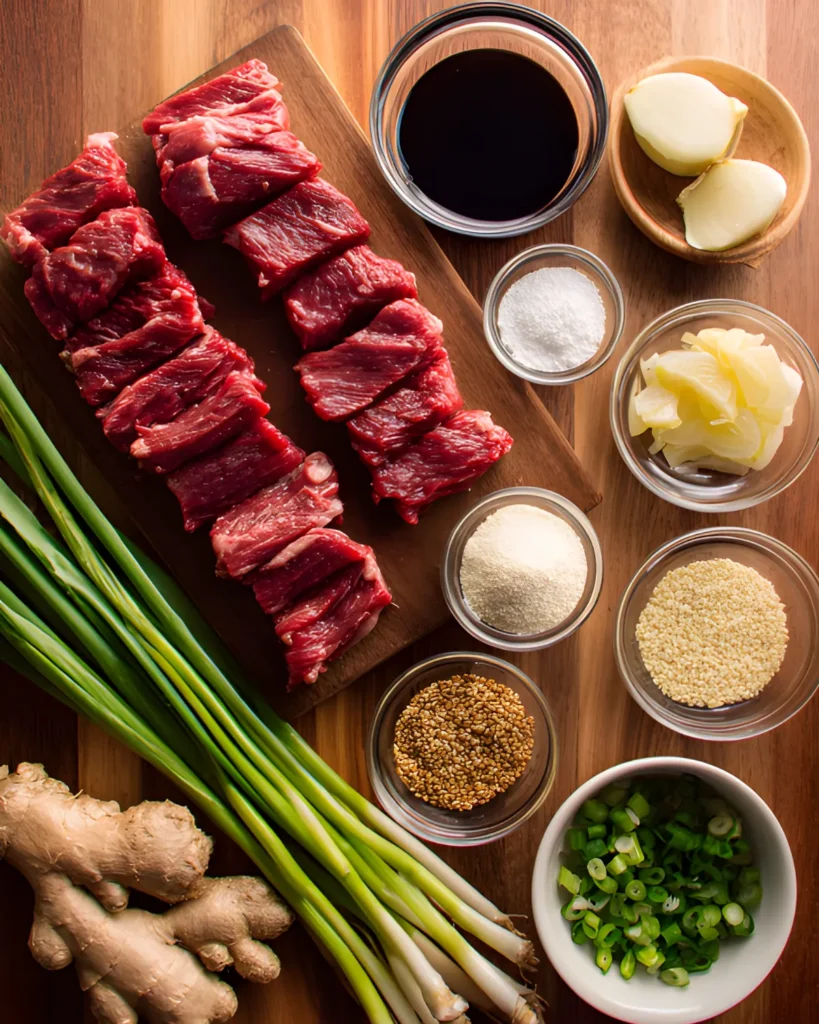
Selecting the proper cut transforms texture completely. Flank steak remains reliable, especially when you slice it against the grain, much like we explain in our Steak Recipes section, where beef preparation techniques matter greatly.
Because beef kushiyaki cooks quickly, thin slicing matters more than thickness of cut. Slight freezing for 20–30 minutes before slicing makes cutting easier and more precise.
Here’s a quick comparison:
| Beef Cut | Why It Works |
|---|---|
| Flank Steak | Lean, affordable, slices thinly |
| Wagyu | High marbling, luxurious texture |
| Ribeye | Tender with strong beef flavor |
The Perfect Beef Kushiyaki Marinade
The marinade combines soy sauce, sugar, sake, ginger, and garlic. Because balance defines Japanese cooking, similar sweet-savory layering appears in several dishes inside our Dinner Recipes category, where sauce chemistry enhances flavor without overwhelming it.
Because soy sauce remains potent, marinate for two hours minimum but no more than four hours. Longer marination risks overpowering saltiness.
If you want extra glaze, reserve a portion of the marinade before adding raw meat. Simmer gently until slightly thickened. Brush during the final minute of grilling.
This balance creates the signature shine that makes beef kushiyaki visually irresistible.
Step-by-Step Cooking Method
Preparing and Skewering
First, soak bamboo skewers for several hours. This step prevents burning. Meanwhile, remove marinated beef from refrigeration and allow it to rest briefly.
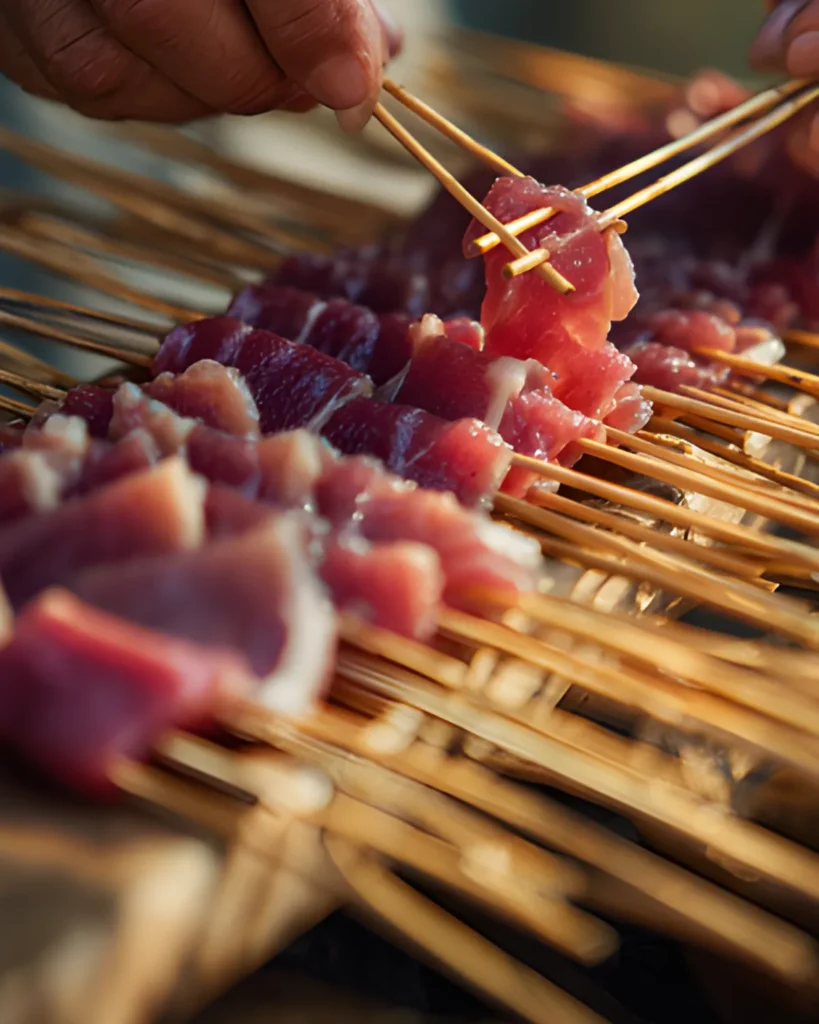
Next, thread folded slices onto each skewer. Folding increases surface area and encourages even caramelization. Three to four slices per stick work best.
Because consistency matters, keep slices uniform in size. Even thickness ensures even cooking.
Discard used marinade unless you boil it thoroughly. Food safety always comes first.
Grilling to Perfection
Preheat your grill to medium-high heat. High heat allows fast searing without drying the interior.
Place skewers directly over heat. Cook for approximately three minutes per side. Watch carefully. Thin beef cooks rapidly.
When the exterior turns glossy and lightly charred, remove immediately for medium doneness. Slight pink inside preserves tenderness.
If flare-ups occur, move skewers briefly to indirect heat. You can also use a cast iron grill pan indoors.
Timing remains crucial. Overcooking leads to toughness. Controlled heat creates excellence.
Variations, Nobu Style & Serving
Beef Kushiyaki Nobu Style
Upscale restaurants often present this dish with minimalist elegance. Nobu-style beef kushiyaki emphasizes premium Wagyu, precise slicing, and light finishing glaze.
To replicate that feel, choose higher marbling beef. Reduce reserved sauce slightly thicker. Brush gently during final seconds of cooking.
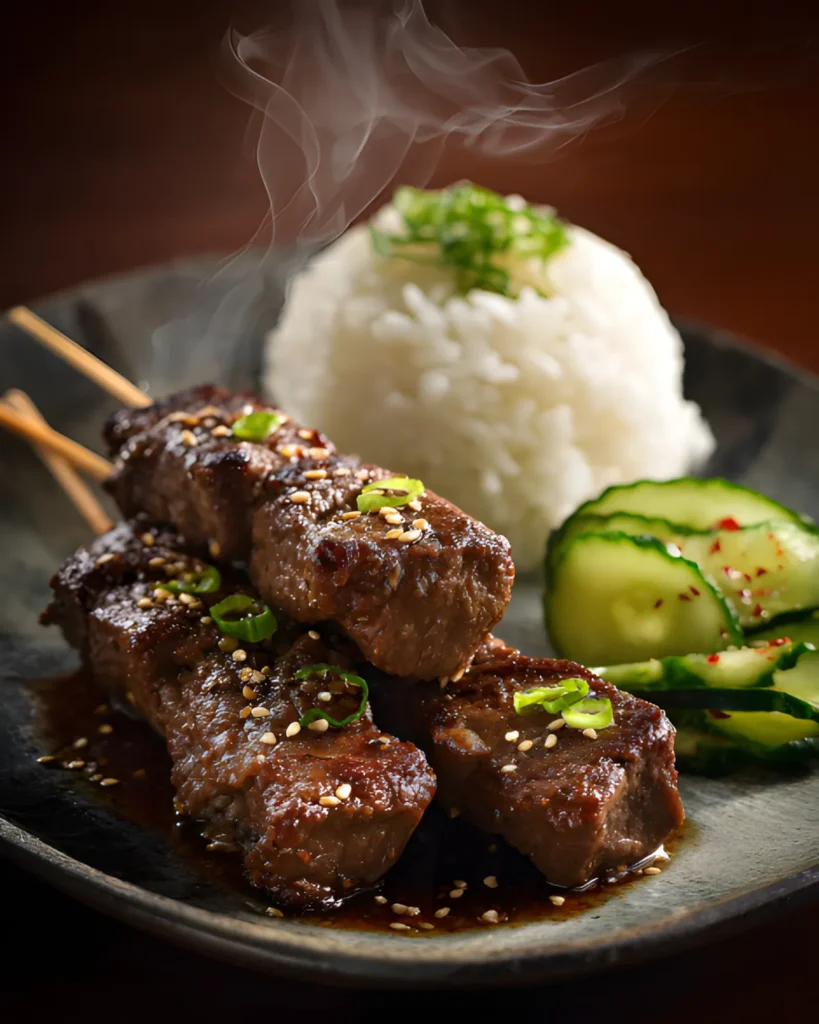
Additionally, plate skewers neatly aligned. Sprinkle extra sesame seeds and fine green onions. Serve with a small dipping bowl.
Small details elevate the entire experience.
Anticucho Inspiration & Serving Ideas
For a bold twist, explore beef kushiyaki anticucho variation. Add a touch of rice vinegar and a small hint of chili paste to the marinade. This fusion approach introduces subtle heat while preserving Japanese balance.
Serve skewers with steamed white rice, cucumber salad, or miso soup. Neutral sides offset the savory glaze beautifully.
For gatherings, prepare ahead and grill just before serving. Store leftovers in airtight containers for up to three days. Reheat gently in a skillet to maintain tenderness.
FAQ
What cut of beef is best for beef kushiyaki?
Flank steak works perfectly because it slices thinly and absorbs marinade quickly. However, Wagyu or ribeye elevate the flavor and texture. Always slice against the grain for tenderness.
How long should you marinate beef kushiyaki?
Marinate for at least two hours for deep flavor. Do not exceed four hours. Because soy sauce remains strong, longer marination may result in overly salty beef.
What is the difference between kushiyaki and yakitori?
Kushiyaki refers to skewered and grilled items, including beef, pork, or seafood. Yakitori specifically refers to grilled chicken skewers. Both use similar grilling methods, but the protein differs.
Can you make beef kushiyaki without a grill?
Yes. Use a grill pan on the stovetop or broil in the oven. Cook over medium-high heat for about three minutes per side and monitor closely to prevent overcooking.
Conclusion
Beef kushiyaki combines simplicity with bold flavor. Thin slices, balanced marinade, and quick high-heat grilling create tender, caramelized skewers every time. Whether you follow traditional preparation or experiment with Nobu-style upgrades, this Japanese classic delivers restaurant-quality results at home. Fire up your grill and experience the magic yourself.
SHORT STORY
Hi, I’m Ethan—the cook, creator, and voice behind this cozy corner of the web. My love for dishes like beef kushiyaki began in a small sunlit kitchen where I watched simple ingredients transform into unforgettable meals. That spark never left me. Today, I share recipes that blend comfort and creativity, just like these Japanese grilled skewers. Whether you’re planning a family dinner or grilling for friends, this beef kushiyaki recipe brings bold flavor and joy to your table. Pull up a chair, grab your skewers, and let’s cook something wonderful together.
Print
Beef Kushiyaki: 7 Powerful Secrets for Amazing Flavor
- Total Time: 2 hours 26 minutes
- Yield: 4 servings 1x
Description
Authentic Japanese beef kushiyaki made with thinly sliced beef marinated in soy sauce, sake, ginger, and sesame, then grilled to perfection.
Ingredients
1 pound Wagyu or flank steak, thinly sliced
1/2 cup sugar
2/3 cup soy sauce
2 tablespoons sake
1 small piece ginger, grated
1 to 2 cloves garlic, crushed
2 tablespoons sesame seeds
2 tablespoons canola oil
2 green onions, chopped
Instructions
1. Soak bamboo skewers in water for several hours.
2. Combine sugar, soy sauce, sake, ginger, garlic, sesame seeds, oil, and green onions in a resealable bag.
3. Slice beef into thin 2 x 2 inch pieces.
4. Marinate beef for 2 to 4 hours.
5. Thread beef onto skewers and discard used marinade.
6. Preheat grill to medium-high heat.
7. Grill skewers for about 3 minutes per side until caramelized.
8. Serve hot with extra sesame seeds and green onions.
Notes
Do not marinate longer than four hours to prevent excess saltiness.
Slice beef against the grain for tenderness.
Use metal skewers if preferred.
- Prep Time: 20 minutes + 2 hours marinating
- Cook Time: 6 minutes
- Category: Main Course
- Method: Grilling
- Cuisine: Japanese
Nutrition
- Serving Size: 1 skewer
- Calories: 320
- Sugar: 14g
- Sodium: 980mg
- Fat: 18g
- Saturated Fat: 6g
- Unsaturated Fat: 10g
- Trans Fat: 0g
- Carbohydrates: 16g
- Fiber: 1g
- Protein: 24g
- Cholesterol: 75mg